Interactive tools like games have the power to keep users engaged in a way that traditional media or even passive forms of learning cannot. When people are actively involved—especially in a game setting—they are more likely to retain information. The immersive experience makes learning feel less like a chore and more like an enjoyable challenge.
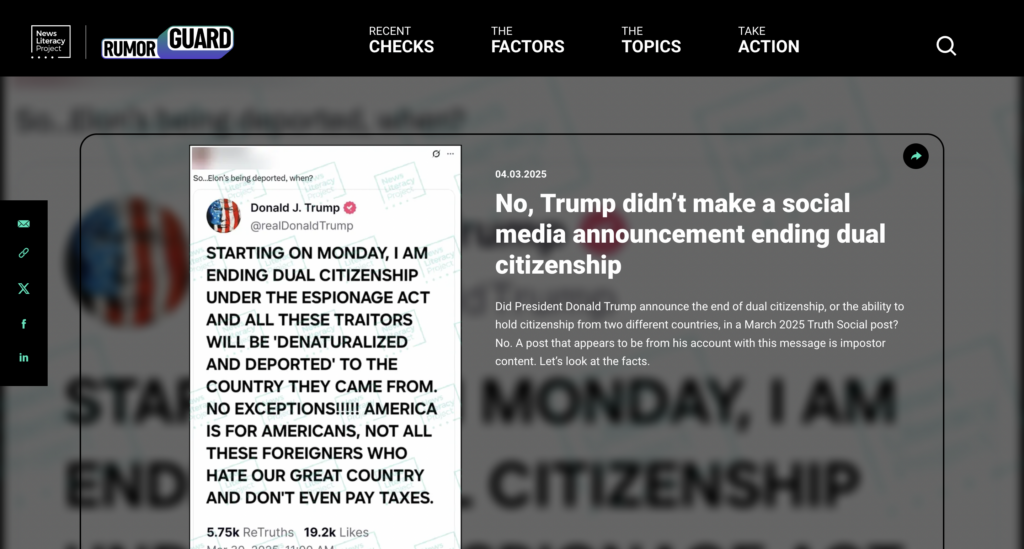
The News Literacy Project’s Rumor Guard did a very good job of teaching readers about misinformation. When I first clicked on the link to this page, my eyes were filled with a tweet from President Donald Trump, an announcement ending dual citizenship. Next to the screenshot of the tweet, it says plainly, ‘No, Trump didn’t make a social media announcement ending dual citizenship.’ This, in my opinion, was a great way to get the audience both visually engaged and engaged in the content of the site. The Rumor Guard was appealing to the eye, and easy to navigate.
It is crucial for platforms like The News Literacy Project to take decisive action in eradicating the spread of fake tweets, as misinformation can quickly escalate, damaging reputations, inciting unnecessary panic, and distorting public understanding of critical issues. These platforms can play a pivotal role in fostering a more informed and responsible online community, protecting users from the harmful effects of deception.
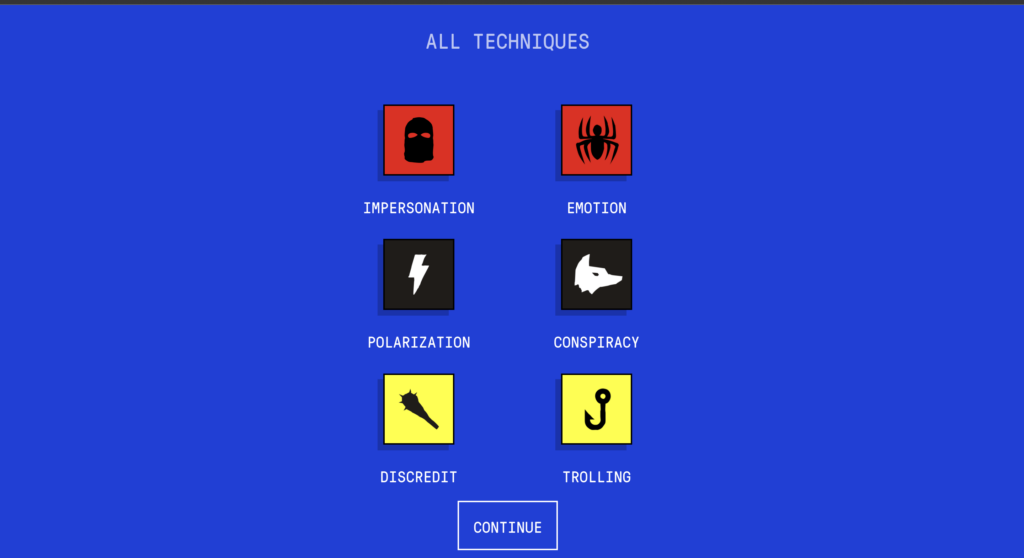
This game on getbadnews.com took me through what it is like to set up and run a social media account that spreads misinformation and fake news. In this click-through simulation exercise, the game helps you, as the misinformation mastermind, master all six techniques that a fake news account aims to target: impersonation, emotion, polarization, conspiracy, discredit, and trolling.
The goal throughout the exercise is to gain as many “followers” as you can by spreading misinformation. You provoke emotion by posting fake articles, spark conspiracy through controversial topics, and troll followers through impersonation.
I think this simulation offers a really unique perspective on how misinformation is spread and the damage it can cause. I find it an interesting choice by getbadnews.com to teach users about misinformation by having them act as the ones spreading the misinformation. However, I did find it effective, in a way. By running through this simulation, I know more about how easily deceived people can be on social media and how easy it can be for misinformation to spread.
This game did a great job at showing how misinformation can be damaging. But I will say that I did somewhat enjoy playing the part of the one behind the screen, which could be contradictory to what the site is aiming to accomplish. With the goal of the simulation being to gain followers, this could potentially send the wrong message to its users. I could see a world where someone plays the simulation, has a little too much fun and ultimately sets up their own fake news account. While I do think this game brings great awareness to how misinformation surrounds us every day, I think it’s possible for someone to get the wrong idea from it.