Did NASA say Earth will experience 6 days of darkness? How I fact-checked a viral claim
Recently, I came across a viral claim that my mother sent me on Instagram. The post claimed that NASA announced Earth would experience six days of total darkness due to a solar storm, and this would happen sometime in the near future. The post included some scary language, like “the worst solar storm in 250 years,” and “blackouts expected globally.” My gut told me this was suspicious, but I wasn’t 100% sure. It seemed like something that could happen, but the fact that I hadn’t seen it in the news made me question it.
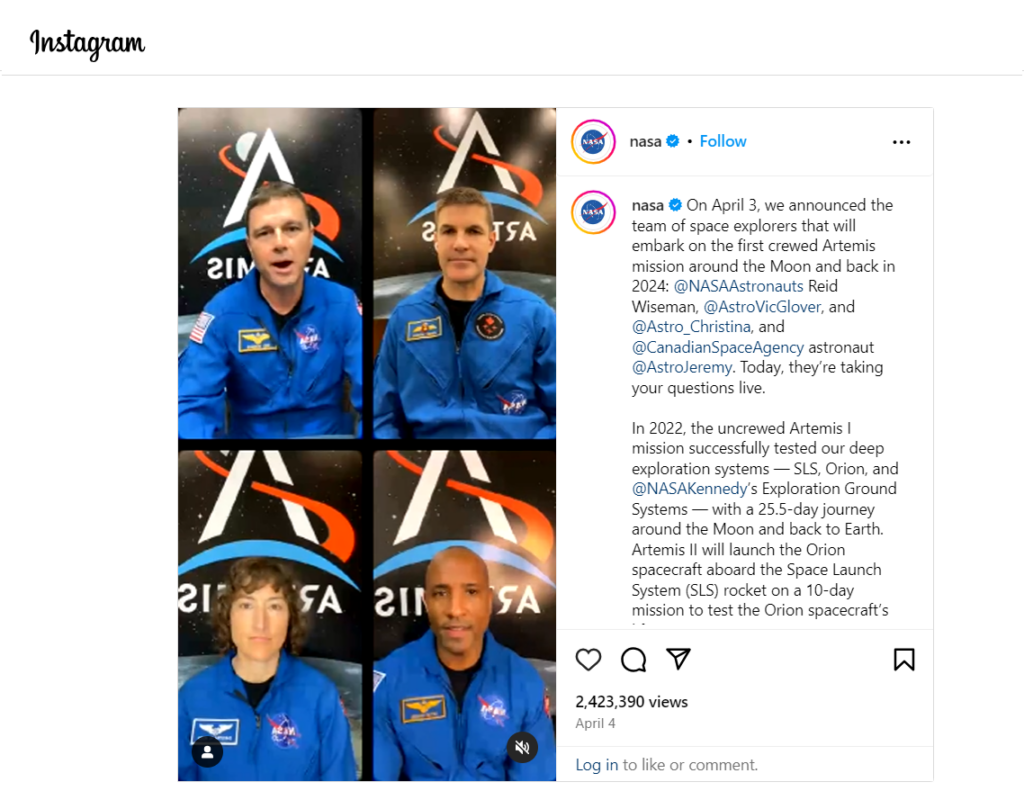
In this post, I’ll walk you through the process I used to check this claim, using the SIFT method (Stop, Investigate the source, Find better coverage, and Trace claims). This kind of lateral reading is an effective way to sort facts from fiction, and it’s something I recommend everyone try when faced with a questionable post online.
Step 1: Stop and Ask Questions
Before clicking on any links or diving into searches, I paused and asked myself:
Where is this information coming from?
Has it been widely reported by trusted news outlets?
Does it sound like an extraordinary claim?
The fact that it mentioned “six days of darkness” immediately raised a red flag — that’s a huge event and would be everywhere if it were true.
Step 2: Investigate the Source
The Instagram post didn’t link to an official NASA page or a well-known news outlet. It linked to a site called “Ancient Astronaut Theorists.” I searched for that site on Media Bias/Fact Check and found it was labeled as “questionable source” and known for publishing conspiracy theories and pseudoscience. I also found multiple articles addressing the claim.
Step 3: Find Better Coverage
Next, I opened a new tab and searched:
“NASA six days of darkness site:nasa.gov”
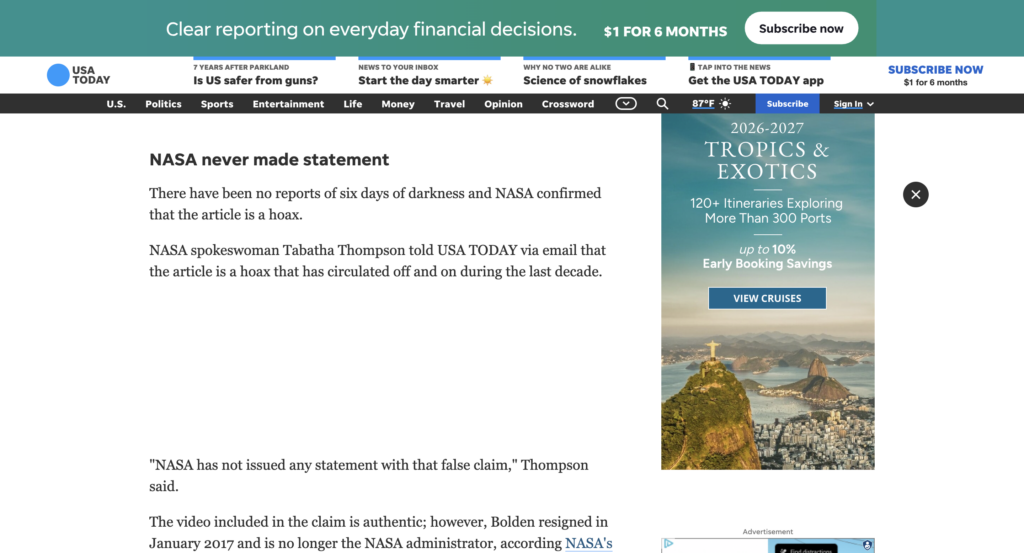
This limited results to only NASA’s official website. Nothing credible came up — no press releases, no warnings. I also searched “NASA six days of darkness” on Google News. Again, nothing from trustworthy news sources like Reuters, BBC, or Associated Press.
Step 4: Trace the Claim to Its Origin
I wanted to see where this claim started. Using Snopes.com, a fact-checking website, I searched for “six days of darkness NASA.” Sure enough, Snopes had a page on it — the claim first went viral back in 2014 and has reappeared several times since. Snopes rated it “False.” It was completely fabricated and not based on any scientific event.
Conclusion:
After checking sources, doing a lateral read, and verifying with trusted fact-checking sites, I concluded that this claim was completely false. There is no scientific basis for the Earth going completely dark for six days, and NASA never said anything like this.
This experience is a good reminder that not everything shared on social media is true even if it sounds “science-y” or mentions NASA. Using the SIFT method helped me move beyond my initial skepticism and get to the truth. In an age of misinformation, it’s important to slow down, question what we see and verify before sharing.